A Pocketful of Doors: Leicester's 2026 Advent Maths Countdown
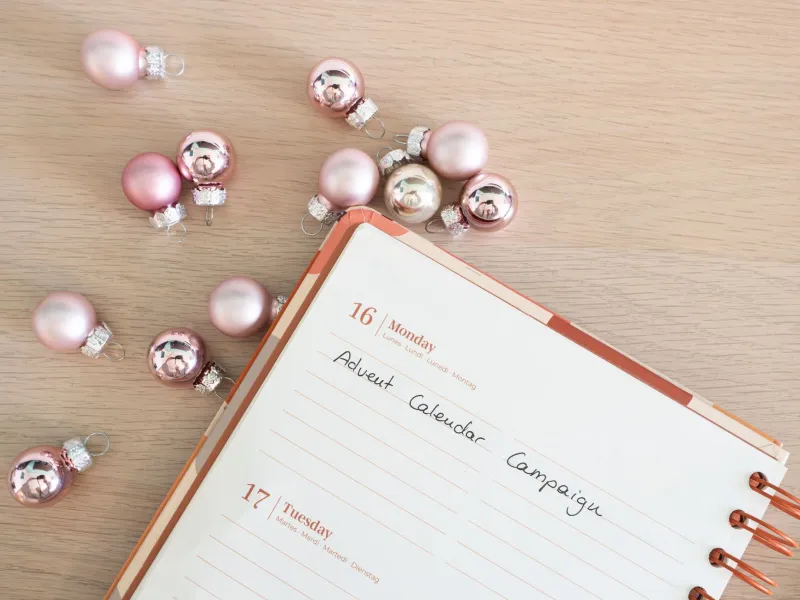
Advent calendars are usually about chocolate. This one is about the moment a child says, 'Hang on, that can't be right.' For 2026 we have put together a pocket-sized calendar of 24 Leicester maths doors: one short puzzle for each day from 1 to 24 December, each tied to a place, number or winter ritual in the city. No scores, no leaderboard, and no need to finish before the kettle boils.
Advent 2026 begins on Sunday 29 November, so the first door falls on Tuesday 1 December. That gives you a couple of days to print the cards, fold them into a small box, or simply scribble the day numbers on the back of an envelope. The point is not the stationery. The point is the daily habit of noticing, estimating and checking.
Why a Leicester calendar?
Local numbers make abstract maths concrete. A bus timetable is not a worksheet about intervals; it is the 09:17 to Beaumont Leys and the question of whether you can make the connection. A market stall is not a percentage exercise; it is three bunches of flowers and a sign that says 'three for £5'. When the puzzle has a postcode, students are more willing to argue about the answer.
The calendar also suits the way families actually use maths at home: in short bursts, between other things, with a pencil that has gone missing. Each door is designed to take five to ten minutes. Teachers can use one as a lesson starter. Families can use one at tea time. Nobody needs to complete a page of thirty questions.
How each door works
Every prompt has three layers. First comes the question: short, concrete, and a little bit cheeky. Second comes a hint, because getting stuck is normal and a hint is not a clue that you have failed. Third comes an extension: the same idea with one number or condition changed. The extension is not extra homework. It is what you do if the first answer arrives suspiciously quickly.
Keep the answer sheet folded in the box. Open only the line you need, after the discussion. A printable one-page answer sheet is deliberately plain: answers, a sentence of explanation, and one 'try this next' note per day. It is there to settle arguments, not to replace them.
What is behind the 24 doors?
The prompts below are the spine of the calendar. They are deliberately brief here; the printable cards add the numbers, diagrams and hints.
- Clock Tower: estimate the angle between the hands at 4:20. Hint: one hour is 30 degrees. Extension: when are the hands exactly opposite?
- Leicester Market: compare three stall deals by unit price. Hint: make every deal cost the same number of items. Extension: which deal is still best if you only need two?
- Town Hall steps: count the risers, measure one, and estimate the total height. Hint: average the risers. Extension: how many steps to climb the height of the Clock Tower?
- Haymarket bus stop: if a bus comes every 12 minutes and one leaves at 09:17, when is the fourth bus? Hint: draw a number line. Extension: what if the interval is 7 minutes?
- New Walk: continue a railing pattern using only two shapes. Hint: look for a repeat after every four. Extension: design a pattern with a repeat of six.
- Leicester Cathedral: sketch a window with exactly two lines of symmetry. Hint: start with a rectangle. Extension: can you make one with rotational symmetry but no lines of symmetry?
- Jewry Wall: a Roman tile is 20 cm by 10 cm. How many fit a 1 m by 1 m square? Hint: change metres to centimetres first. Extension: what is the perimeter of the tiled square?
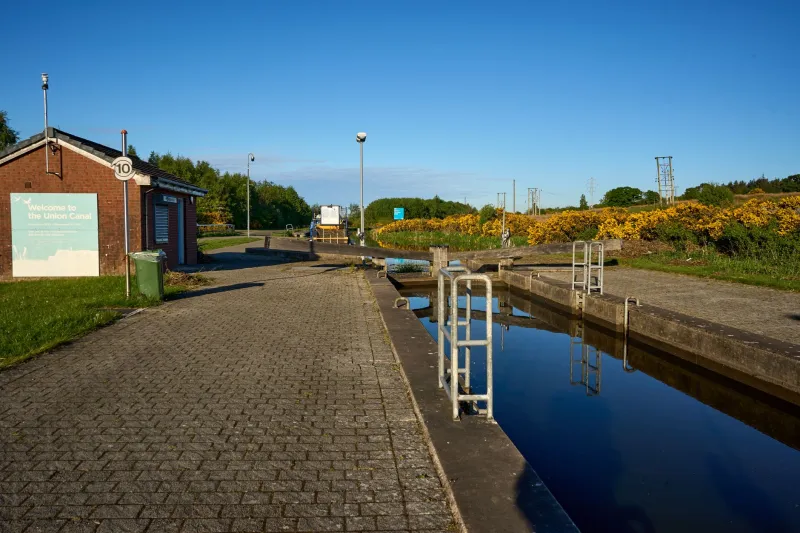
- Grand Union Canal: a lock holds water in a cuboid 6 m by 2 m by 1.5 m. Estimate the volume. Hint: volume is length times width times depth. Extension: how many baths is that, roughly?
- Golden Mile: a string of lights has 24 bulbs. How many strings for 150 bulbs, and how many spare? Hint: division with remainder. Extension: if one bulb fails, does the string still work? Discuss.
- Abbey Pumping Station: gear A has 12 teeth and gear B has 36. How many turns of A for one turn of B? Hint: ratio. Extension: which gear turns faster?
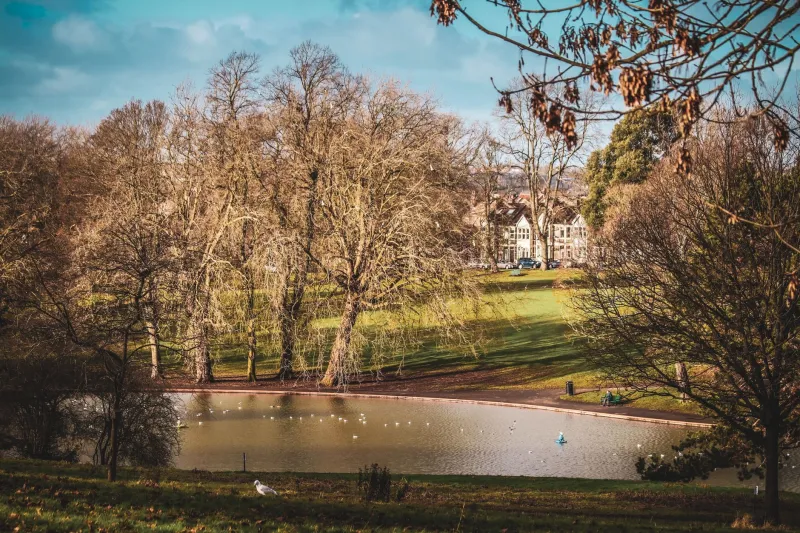
- Victoria Park: a runner does 5 km in 25 minutes. What is the pace per kilometre? Hint: divide both numbers by 5. Extension: what pace for a 20-minute 5 km?
- Leicester railway station: convert 16:45 to 12-hour time, then add 35 minutes. Hint: 16:45 is 4:45 pm. Extension: convert your answer back to 24-hour time.
- Guildhall: find three right angles in the timber frame. Hint: use a corner of paper as a tester. Extension: estimate one non-right angle and check with a protractor.
- King Power Stadium: a team has 7 wins and 3 draws. How many points? Hint: wins are 3 points, draws 1. Extension: how many wins to reach 30 points with 4 draws?
- Leicester Tigers: a try is 5 points and a conversion is 2. Find three ways to score 19 points. Hint: start with tries. Extension: can you score 19 with exactly four scoring actions?
- National Space Centre: a countdown starts at 10 and goes down by 2. What is the fifth number? Hint: list them. Extension: where does the sequence cross zero?
- Highcross escalator: it moves 30 steps in 15 seconds. How many steps in one minute? Hint: multiply by four. Extension: how long for 90 steps?
- Belgrave Road sweet shop: choose two boxes from five flavours. How many different pairs? Hint: list them systematically. Extension: how many trios?
- Leicester Museum: a dinosaur model is 4 m long. A drawing is 20 cm long. What scale is the drawing? Hint: same units first. Extension: how long would a 1:20 drawing be?
- River Soar: a gauge reads 0.8 m, then 0.95 m, then 1.1 m. What is the pattern? Hint: difference. Extension: when would it reach 1.7 m at the same rate?
- Town Hall Square: estimate the crowd by counting a small square and multiplying. Hint: decide your square size first. Extension: what could make your estimate too high?
- Guildhall door: a keypad uses four digits, each 0 to 9. How many codes if digits can repeat? Hint: ten choices each time. Extension: how many if digits cannot repeat?
- Highcross wrapping station: a present is 20 cm by 15 cm by 10 cm. Estimate the wrapping paper needed. Hint: think of the faces. Extension: which face uses the most paper?
- Advent Eve: add the numbers 1 to 24. Hint: pair the ends. Extension: what is the sum 1 to n?
Three doors to try first
If you only use three this December, make them Day 1, Day 9 and Day 16. The Clock Tower angle question gives everyone a way in, even if they only estimate. The Golden Mile lights prompt introduces division with remainder in a context where the remainder matters. The Space Centre countdown is a gentle route into negative numbers, and it takes about ninety seconds to explain.
For each one, run the same routine: read the question aloud, give one minute of quiet thinking, then two minutes of talk. Offer the hint only after someone has attempted a sketch or a number sentence. Ask 'how do you know?' before you ask 'what is the answer?'
For teachers
Use one door as a five-minute starter. Put the prompt on the board and nothing else. No method, no example, no vocabulary list. Let students choose a representation: a timeline, a table, a bar model, a scribble. Then take two or three responses and compare them. The answer sheet is for you, not for the first thirty seconds.
The extensions are written to be low-floor and high-ceiling. Day 14, for example, starts with points from wins and draws; the extension asks for a combination that reaches 30 points with 4 draws. That is still arithmetic, but it now involves a constraint. Day 22 starts with a four-digit keypad and ends with permutations without repetition. Same door, different room.
For families
Keep it small. One prompt a day is plenty. If someone is stuck, read the hint in a normal voice and carry on with the tea. If the answer is wrong, ask where the method came from before correcting it. The answer sheet can wait until after the argument; sometimes the argument is the learning.
No printer? Write the day numbers on scraps of paper and put them in a mug. No mug? Use the notes app on a phone. The calendar is not the object. The calendar is the excuse to ask one good question a day.
By 24 December, the box will be empty and the answer sheet will be covered in pencil marks. That is the point: twenty-four small doors into Leicester's maths, opened one at a time.