The Towpath Calculator: A Grand Union Canal Maths Ramble for Leicester Families
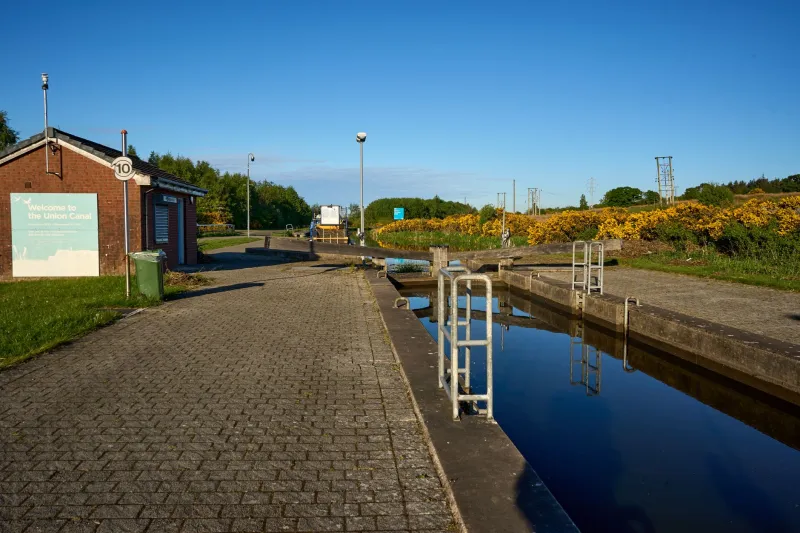
Leicester has no shortage of maths trails. You can count your way round the Clock Tower, hunt patterns at the Jewry Wall or treat the market as a queueing laboratory. This one is different: it follows water. The Grand Union Canal gives Leicester a long, linear classroom, complete with locks, bridges, mile markers and boats that move at a speed you can actually estimate without a spreadsheet.
Start somewhere sensible. Aylestone Meadows is a good family-friendly launch point, and Freemen's Meadow gives you an easy city-centre taste of the towpath. From there you can head north towards Belgrave, Birstall and Watermead Country Park, or simply walk a short stretch and turn back. The maths works either way. Bring a pencil, a notebook, a tape measure if you have one, and a grown-up who is happy to pace out distances. You will also need a calculator for some stops, though mental arithmetic is very much allowed.
Stop 1: A lock is a box with a party trick
A canal lock looks complicated. Really it is a rectangular box of water with doors at each end. That makes it a volume problem in disguise.
Pick a lock with a safe viewing spot, well back from the edge. Estimate the length and width of the chamber, then find the rise or fall written on the lock gear or notice board. Suppose the chamber is about 22 metres long, 3 metres wide and the water level changes by 2.5 metres.
Volume = length × width × height
So: 22 × 3 × 2.5 = 165 cubic metres.
One cubic metre is 1,000 litres, so that is 165,000 litres per lockful. If a bath holds roughly 80 litres, the lock shifts about 2,000 baths of water every time it is used. On a broad lock the width might be nearer 4.5 metres, giving 247.5 cubic metres, or 247,500 litres. These are estimates, not engineering drawings, and that is the point: estimating is a maths skill, not a confession.
A good question for curious children: does a heavy narrowboat change how much water the lock uses? The short answer is no, not in the way you might expect. The water needed to change the level depends mainly on the area of the lock and the height it rises or falls. The boat displaces water, but the lockage water is still governed by the chamber. Cue thoughtful faces and possibly an argument about baths.
Stop 2: The gentlest hill in the Midlands
Canals are not flat, but they are spectacularly close to it. Locks do the climbing in steps so that the water between them can stay level. That is why a canal can run for miles without looking like it is going uphill at all.
Suppose a stretch of canal rises 30 metres over 12 kilometres thanks to a flight of locks. Convert to the same units: 12 kilometres is 12,000 metres.
Gradient = rise ÷ run = 30 ÷ 12,000 = 0.0025
As a percentage that is 0.25%, or a gradient of 1 in 400. Compare that with a steep road hill at 1 in 10. The canal is forty times gentler. This is why horses could tow boats for long days and why the canal feels almost suspiciously relaxed.
Puzzle stop: if a flight of locks lifts the canal 18 metres over 6 kilometres, what is the average gradient? Work it out in metres first, then turn it into a percentage. You should get 0.3%, or 1 in about 333.
Stop 3: Bridges, paces and map scale
Bridges are the canal's built-in number line. Many have numbers or names, and the spacing between them is a ready-made scale exercise.
Take an Ordnance Survey map at 1:25,000. That means 1 centimetre on the map represents 25,000 centimetres in real life, which is 250 metres. So 4 centimetres is 1 kilometre. If two bridges are 6 centimetres apart on your map, they are about 1.5 kilometres apart on the towpath.
Now check it on the ground. An adult pace is roughly 0.75 metres, so 100 metres is about 130 paces. Count a shorter stretch, compare it with the map, and see how close your estimate gets. The towpath may wiggle, the map may be folded the wrong way, and someone may need a snack. That is all part of the measurement.
Puzzle stop: a bridge and a lock are 2.5 centimetres apart on a 1:25,000 map. How far is that in metres? Answer: 625 metres.
Stop 4: Boat speed and the timetable problem
Canal boats are not racing anybody. A steady narrowboat might manage about 4 kilometres per hour on open water, which is a brisk walking pace. That gives you a lovely ratio problem.
At 4 kilometres per hour, 1 kilometre takes 15 minutes. A 7-kilometre stretch therefore takes 1 hour 45 minutes before locks. Add three locks at about 15 minutes each and you have another 45 minutes. Total: 2 hours 30 minutes.
If the boat sets off at 10:20, the estimated arrival time is 12:50. If you want to arrive by 1pm, leave at 10:30. Real canal journeys are less tidy than this, because queues happen, locks take longer with a crowd, and somebody always has to find the windlass. But the arithmetic gives you a sensible planning tool and a good reason to practise time calculations without calling them time calculations.
Stop 5: The towpath as a data line
Find a bench with a view of the water. Set a timer for ten minutes and tally what passes: walkers, cyclists, dogs, boats, ducks, people carrying carrier bags. Then turn the tally into fractions and percentages. If 18 users pass and 3 are cyclists, cyclists are 3/18 = 1/6, or about 17% of the total.
You can also estimate towpath width. If the path is about 2.5 metres wide and 200 metres long, its area is 500 square metres. That is the kind of maths that planners use when they ask whether a path can cope with a busy Sunday.
A five-minute puzzle card
- A lock chamber is 20 metres by 3.2 metres, with a rise of 2.8 metres. What volume of water is moved? Give your answer in cubic metres and litres.
- A canal rises 12 metres over 8 kilometres. What is the average gradient as a percentage?
- On a 1:25,000 map, two features are 3.5 centimetres apart. How far is that in metres?
- A boat travels at 3 kilometres per hour. How long does 4.5 kilometres take?
Answers: 1) 179.2 cubic metres, or 179,200 litres. 2) 0.15%, or 1 in about 667. 3) 875 metres. 4) 1 hour 30 minutes.
Before you go
Canal maths is outdoor maths, so safety comes first. Keep children away from lock edges and never let them operate lock gear. Stay behind railings where they exist, watch for cyclists on shared towpaths, and remember that wet stone is slippery. The best calculations are the ones you can still explain on the way home.
The Grand Union does not shout about its numbers. It simply sits there, holding water, stepping up hills and offering bridges at convenient intervals. Take a walk, pack a pencil and let the towpath do the teaching.