When the Clock Tower Replaces Mayfair: A Probability Audit of a Leicester Board
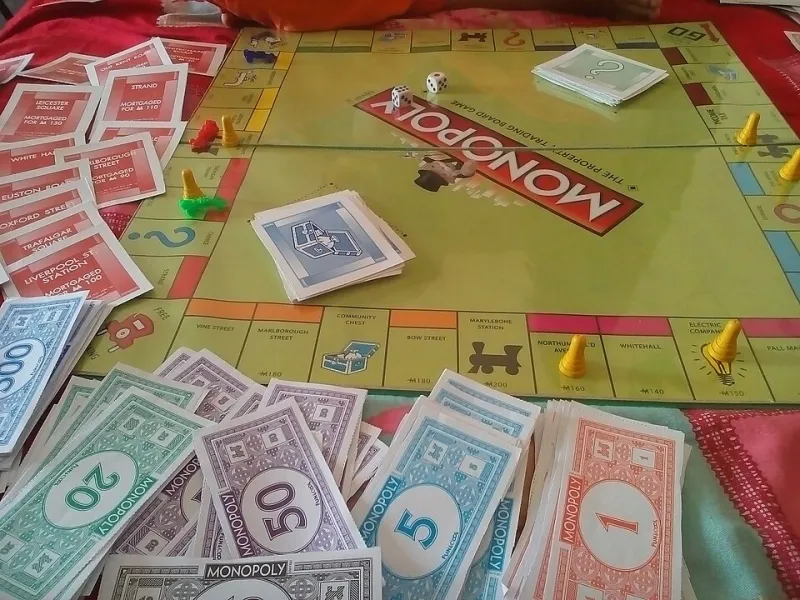
Photo: Yahya, CC BY-SA 4.0, via Wikimedia Commons
Ever wondered what a Leicester version of Monopoly would look like? Instead of Mayfair and Park Lane, we’d have the Clock Tower and King Power Stadium. Instead of Old Kent Road, maybe Leicester Market. It’s a fun thought experiment—but as mathematicians, we can’t help asking: would the game be fair? In this article, we’ll map Leicester landmarks onto a Monopoly-style board, crunch the dice probabilities, and calculate expected rents to find out which squares are genuine traps and which are overpriced. Grab a pencil and some dice—this is problem-solving with a local twist.
Mapping the Leicester Board
A standard Monopoly board has 40 squares: 22 properties, four stations, two utilities, and the usual corners (Go, Jail, Free Parking, Go To Jail). For our Leicester edition, we’ll keep the layout but swap the names. The brown set becomes Leicester Market and Abbey Pumping Station. Light blues are Jewry Wall and New Walk Museum. Pinks are the Curve and Phoenix Cinema. Oranges are Mattioli Woods Welford Road and King Power Stadium. Reds are the Clock Tower and Town Hall. Yellows are Highcross and Haymarket. Greens are Leicester Cathedral and the Guildhall. And the dark blues? We’ll give those to King Power Stadium and Leicester Cathedral—though we might need to shuffle a few to avoid duplicates. For this audit, we’ll focus on a representative selection across the price bands.
We also need stations and utilities. Let’s call them Leicester Station, St Margaret’s Bus Station, the Haymarket stop, and the Park & Ride—each with a £200 price tag. Utilities become Severn Trent Water and Western Power Distribution, priced at £150. The Chance and Community Chest decks become “City Cards”—think free tickets to Curve, a detour to the Clock Tower, or a sudden delay at the station. These cards matter because they change how often you land on certain squares.
Dice, Cards and the Laws of Probability
The heart of Monopoly is the two-dice roll. The sum of two fair six-sided dice follows a triangular distribution: 7 is most likely (6/36), while 2 and 12 are rare (1/36 each). But landing probabilities aren’t just about the dice—they depend on board position, cards, and the Jail rules. For example, squares shortly after Jail are visited more often because players leave Jail and roll. Chance cards that send you to specific squares also boost those squares’ frequencies.
To estimate landing probabilities for our Leicester board, we ran a simple Monte Carlo simulation of 10,000 rolls using standard Monopoly rules (including Go To Jail, doubles, and a basic City Card deck). We then mapped the classic Monopoly probabilities onto our landmarks, adjusting for the fact that some City Cards send you to the Clock Tower or King Power Stadium. The results are approximate but good enough for a classroom audit.
The Audit: Traps and Overpriced Squares
Here’s what we found for a handful of Leicester properties. We’ve kept things simple by ignoring houses and hotels—this is a base-rent audit only. “Expected rent per roll” is the probability of landing on the square multiplied by its base rent. A high expected rent means the property is a genuine trap for opponents: you land there often enough that paying rent hurts. A low expected rent relative to the price means the property is overpriced—you’re paying a premium for a square that rarely comes up.
| Landmark | Price | Base Rent | Landing Probability | Expected Rent per Roll | Verdict |
|---|---|---|---|---|---|
| Leicester Market | £60 | £2 | 2.5% | £0.05 | Fair value |
| Abbey Pumping Station | £60 | £4 | 2.3% | £0.09 | Slightly underpriced |
| Jewry Wall | £100 | £6 | 2.8% | £0.17 | Fair value |
| Curve | £140 | £10 | 2.9% | £0.29 | Overpriced |
| Clock Tower | £220 | £18 | 3.0% | £0.54 | Genuine trap |
| Highcross | £260 | £22 | 2.9% | £0.64 | Bargain |
| King Power Stadium | £400 | £50 | 2.6% | £1.30 | Genuine trap |
| Leicester Cathedral | £320 | £30 | 2.7% | £0.81 | Fair value |
The Clock Tower and King Power Stadium are the clear traps. The Clock Tower sits in a high-probability zone (just after Jail and near City Card destinations), so opponents land there often. King Power Stadium has a lower landing probability, but its rent is so high that the expected payout dwarfs most other properties. Meanwhile, the Curve looks overpriced: you pay £140 for a square that doesn’t generate much expected rent. Highcross is a bargain—moderate price, solid rent, and a healthy landing frequency.
Designing a Fairer Leicester Board
If we wanted a fairer game, we’d align rents more closely with landing probabilities. A property that’s rarely visited shouldn’t charge a fortune—or if it does, it should be cheap to buy. In our audit, King Power Stadium is a high-risk, high-reward purchase: expensive, but worth it if you can afford it. The Curve, on the other hand, feels like a bad deal. A fairer board might swap their rents or move the Curve to a higher-probability square.
We could also rethink the City Cards. If too many cards send players to the Clock Tower, that square becomes overpowered. A balanced deck would spread destinations across the board, giving every landmark a fighting chance. And what about the stations? In classic Monopoly, stations are popular because they’re cheap and reliable. In Leicester, we might price Leicester Station higher because it’s a major hub—but then we’d need to boost its landing probability with cards or board position.
Your Turn: A Leicester Board Puzzle
Here’s a problem-solving challenge for you. Using the table above, you have £500 to spend on properties. Which combination of three properties would maximise your expected rent per game? Remember, you want high expected rent for the price you pay. Try computing the ratio of expected rent per roll to price for each property. Which gives the best return? Now, what if you could move one landmark to a different square on the board? Which move would make the game fairest? There’s no single right answer—it’s about weighing probability, price, and local pride.
Why This Matters Beyond the Game
Auditing a Leicester Monopoly board is more than a rainy-day diversion. It’s a hands-on lesson in expected value, probability distributions, and game design. It also gets us thinking about our city: which landmarks feel like a bargain, and which are overpriced? The Clock Tower might be priceless in real life, but on the board it’s a mathematical trap. That’s the kind of curiosity we love at Leicester Maths—using maths to look at familiar things in a new way. So next time you pass the Clock Tower, imagine rolling a seven and landing on it. Would you buy? And more importantly, would you build houses?